
Grub Boot Iso Image
How can I boot into an ISO file in GRUB? The ISO file is on a reiserfs partition and GRUB can access it (already tested that).
Whether you want to recover access to your unbootable GNU/Linux or you have forgotten your Windows password Rescatux is for you. Use Super Grub2 Disk whenever you cannot boot into any of your systems. Discover all the available rescue options to take in control your machine again. Super Grub2 Disk and Rescatux. Official downloads and documentation site. The next time you boot your computer, you’ll see the ISO boot entry and you can choose it to boot the ISO file. You may have to hold Shift while booting to see the GRUB menu. If you see an error message or a black screen when you attempt to boot the ISO file, you misconfigured the boot entry somehow. GRUB 2 can be configured so that you do not need to burn the ISOs to disk or use a USB drive, but need to run a live environment directly form the boot menu. Obtaining and checking bootable ISO images To obtain an ISO image, you should usually visit the website of the desired distribution and download any image that is compatible with your setup. Adding an Unlisted ISO: To try ISO Files that are not yet listed, use the existing menuentry examples in /boot/grub/grub.cfg and append any options normally found in the distributions syslinux.cfg file on the 'append' line to the 'linux' line of the menu entry. GRUB Boot ISO/disk image from NTFS partition. Ask Question Asked 6 months ago. Active 6 months ago. Viewed 671 times 1. I'm trying to boot an ISO containing a Linux live system from an existing NTFS partition on a PC. The PC has UEFI, and the hard disk is partitioned with GPT, so.
AlbertAlbert2 Answers
The biggest problem with booting an ISO file is that ISOs that are designed to be booted are almost always designed to be booted from a CD. As explained on Marco's blog regarding Grub 2 (emphasis mine):
GRUB can read ISO9660 (”iso”) images. It can for example load the first few sectors and boot it. But most people do not realize is “what then?”. What would the loaded operating system do? It will most likely look for a CDROM, which it won’t find, and fail.
So the dead-simple-est way to boot from some random ISO file is to load it into a virtual machine (VirtualBox, VMware, or Virtual PC) as a virtual CD and boot it there. That should almost always work, because to the VM, it's not an ISO file -- it's a real CD on real CD hardware.
Booting from an ISO file on bare metal is much harder. How you do this depends on which version of Grub you're using, and results can differ depending on what ISO you're using and how it was configured to boot. This is why most boot-ISO-from-USB tools (Unetbootin, WinToFlash, etc) usually extract the ISO contents to the drive -- because that way they can be accessed directly, without confusing the OS being booted.
Grub 1
.. not sure. If possible, menu entries will probably look a lot like Grub4DOS, though I think the 'map --hook' command is a Grub4DOS enhancement. On the plus side, Grub has wider filesystem support than Grub4DOS.
A note on Grub with reiserfs (unconfirmed) indicates you 'have to mount your partition with notail for it to work'.
Memdisk is an option; see below.
Grub4DOS
Grub4DOS offers some experimental 'CD emulation' that works with some ISOs. Unfortunately, Grub4DOS only reads FAT32/NTFS filesystems. Download Grub4DOS.
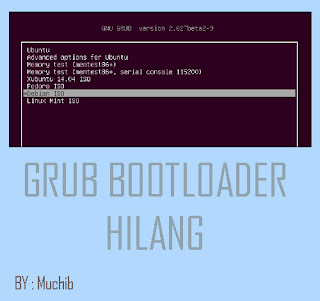
Here's a sample entry (source):
Supposedly the Win7 ISO can be booted with this entry:
Other ISOs can be booted with Memdisk:
You can also use a menu configurator like MultiBootISOs.exe from PenDriveLinux. Place ISOs on the flash drive, and run the utility to install the bootloader and configure the boot menu.
Digipro wp5540 pen tablet driver. This will keep all of your drivers upgraded without you having to understand anything at all concerning your System format or taking any sort of unnecessary challenges. The majority of programs furthermore back-up the whole PC settings, therefore you could return to the former setting if the need come up.check out these updated drivers. When all else falls flat take a crack at the driver installation program. Should the correct configuration brings about issues, or perhaps keeps various drivers from correctly interacting with other drivers, strive to replicate methods logged in as administrator.
Here's a Hak5 episode on installing Grub4DOS.
Grub 2
Here's a couple of example Grub2 entries. chainloader doesn't work to boot an ISO at present, so these entries must (1) use loopback to 'mount' the ISO, and (2) add something like iso-scan or findiso to the linux line that specifies the ISO file.
Unfortunately, there's no generic way to do this. Each different boot entry must be customized to the target ISO's contents. Most Linux LiveCDs use ISOLINUX as a bootloader; find the isolinux.cfg and examine that boot entry to see what it usually boots.
Example entries (source):
If you're trying to boot a non-Linux LiveCD, you may be out of luck. Again, Memdisk may help:
The sounds and functions are expanded if you use “KORG Gadget 2 Le for Mac” with KORG Controller / Synthesizer products. Korg padkontrol software download.
Grub Boot Iso Image From Usb
 quack quixotequack quixote
Grub2 Iso
You can use dd from the terminal to write an iso file to a partition. Just be careful, if you use dd wrong you can wipe everything. It should look something like this:dd if=Desktop/LinuxCDFile.iso of=/Path/To/Partition